Millions of viewers know Hatice Sultan as the passionate princess of Magnificent Century (Muhteşem Yüzyıl, known in the Arab world as حريم السلطان). The real Hatice Sultan is harder to see: Ottoman princesses left few records, and much of what is repeated about her online comes from the drama, not from historians. This article separates what is documented from what is legend, and answers the questions people ask most: who she was, whom she married, how she died and whether any real picture of her survives.
Who was Hatice Sultan?
Hatice Sultan was born in Trabzon some time after 1495, while her father, Prince Selim, was governor of the province. Her mother was Hafsa Sultan, who was also the mother of Suleiman the Magnificent, so Hatice and Suleiman were full siblings. Selim became sultan in 1512 as Selim I, and Hatice grew up as one of several daughters of the ruling family.
Her first marriage: İskender Pasha
In 1509 Hatice was married to İskender Pasha, an Ottoman governor and admiral. As was usual for Ottoman princesses, the marriage tied a trusted statesman to the dynasty. İskender Pasha was executed in 1515. The couple had several children: the sons Mehmed, Süleyman, Ali and Osman, and a daughter, Nefise.
Did Hatice Sultan marry Pargalı İbrahim Pasha?
For a long time it was believed that, after being widowed, Hatice married Pargalı İbrahim Pasha, Suleiman's closest friend and grand vizier from 1523 until his execution in 1536. The story became the romantic heart of Magnificent Century.
Research by the historian Ebru Turan, published in 2009, found no solid evidence for this marriage. Historians now generally accept that İbrahim Pasha married a woman named Muhsine Hatun, and that the Hatice–İbrahim marriage is a later legend. Hatice did marry a second time, and three more children are recorded from that marriage: Mehmed Şah Bey, a daughter named Hanım, and a daughter recorded only as Fülane, a word meaning "so-and-so" that Ottoman records used when a name was not written down.
How did Hatice Sultan die in real life?
The exact date and cause of Hatice Sultan's death are not known. What is documented is that she was alive in 1543–44, when she commissioned the great architect Mimar Sinan to build a small mosque for her in the Aksaray district of Istanbul; the Hatice Sultan Mosque stood until it was demolished in the 1950s. She therefore died some time after 1543.
The popular story that she ended her life in grief after İbrahim Pasha's execution comes from the TV drama and from the İbrahim legend itself. Since the marriage is not supported by the sources, neither is the story of her death. She was buried in a tomb beside her parents in the grounds of the Yavuz Sultan Selim Mosque in Istanbul, together with her sister Hafize Sultan.
Is there a real picture of Hatice Sultan?
No authentic portrait of Hatice Sultan is known. Ottoman princesses were rarely painted from life, and the images that circulate online under her name are usually either stills of the actress Selma Ergeç from Magnificent Century or European portraits of other women, most often the famous portrait of Hürrem Sultan, Suleiman's wife.
Hatice Sultan in Magnificent Century
In Magnificent Century (2011–2014), Hatice Sultan was played by the Turkish-German actress Selma Ergeç. The series builds her story around a love marriage with İbrahim Pasha and his fall from power. It is powerful television, and it made Hatice one of the best-known Ottoman princesses in the world, but it should be watched as drama rather than history. Read more about why Turkish TV series are so popular in the Arab world.
Frequently asked questions
Who was Hatice Sultan's husband?
Her first husband was İskender Pasha, whom she married in 1509. She married again after his death, but modern research shows her second husband was not Pargalı İbrahim Pasha.
How many children did Hatice Sultan have?
Eight children are recorded: five from her first marriage and three from her second.
When did Hatice Sultan die?
Some time after 1543–44. The exact year is not known.
Where is Hatice Sultan buried?
Beside her parents, in the grounds of the Yavuz Sultan Selim Mosque in Istanbul.
Ottoman-inspired jewellery today
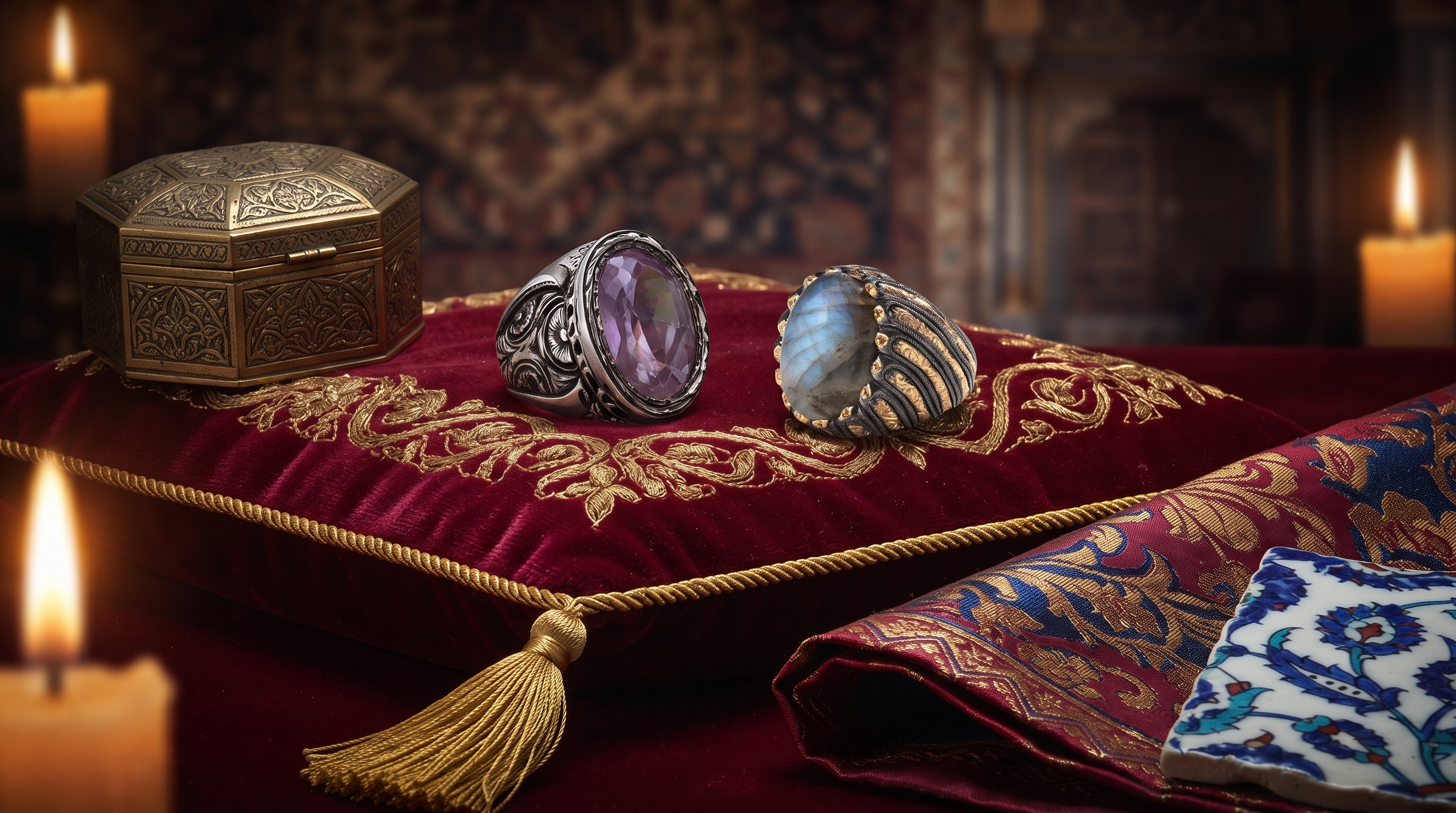
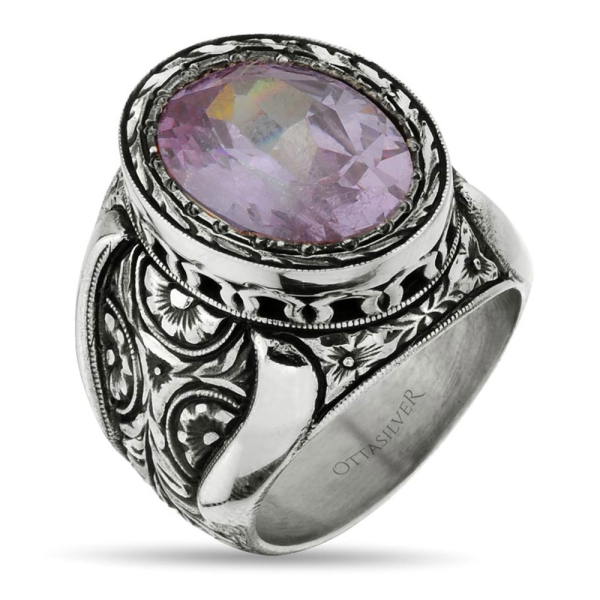
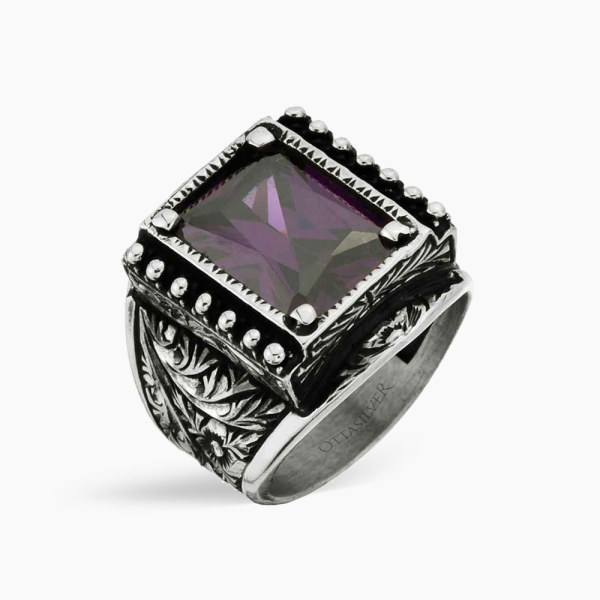
The world Hatice Sultan grew up in was one of extraordinary craftsmanship. The palace in Istanbul kept its own community of master artisans, the Ehl-i Hiref, who made jewellery, seals and ornaments for the royal family, and their scrolling floral patterns and bold stones still shape Turkish jewellery five centuries later.
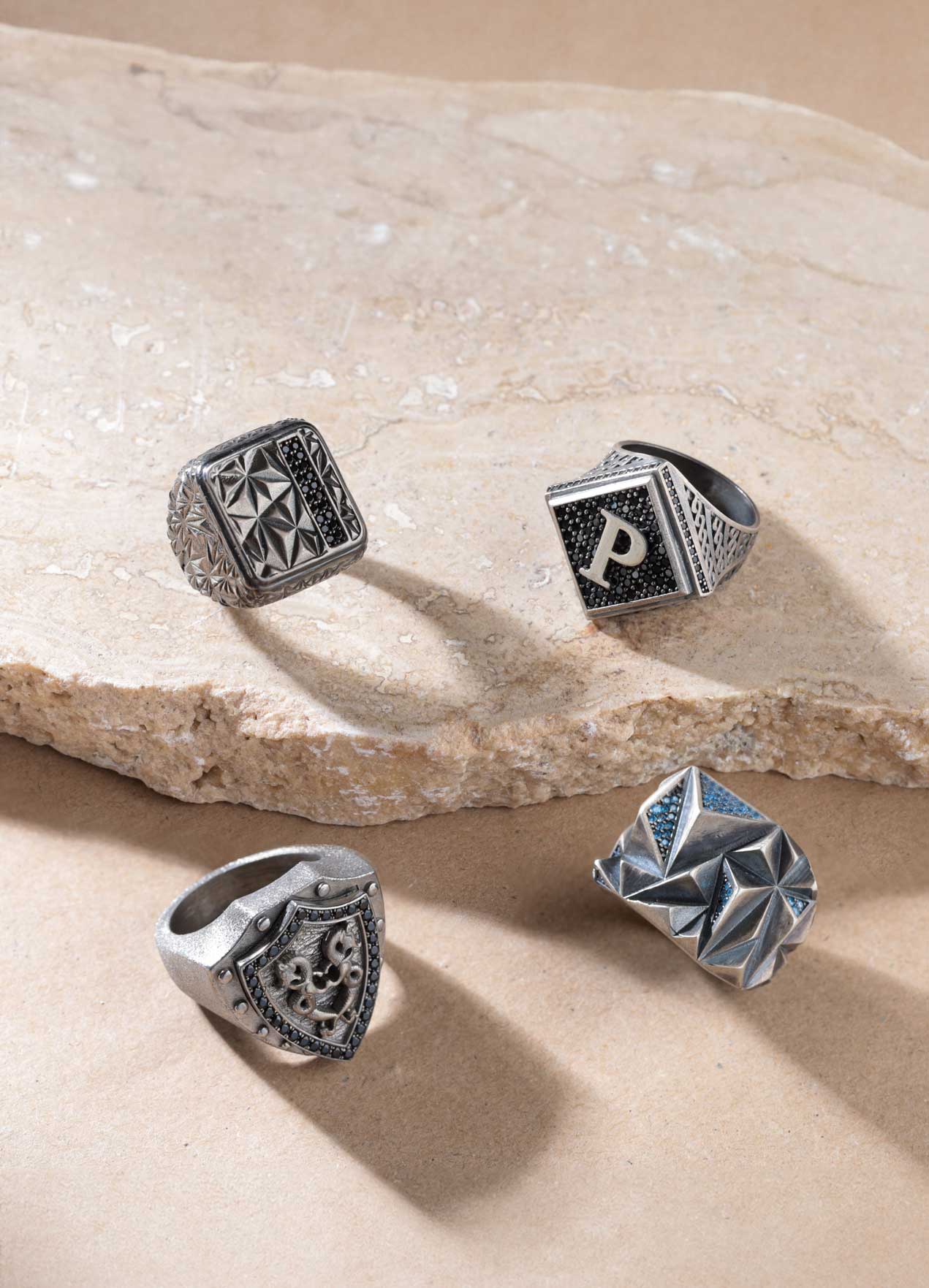
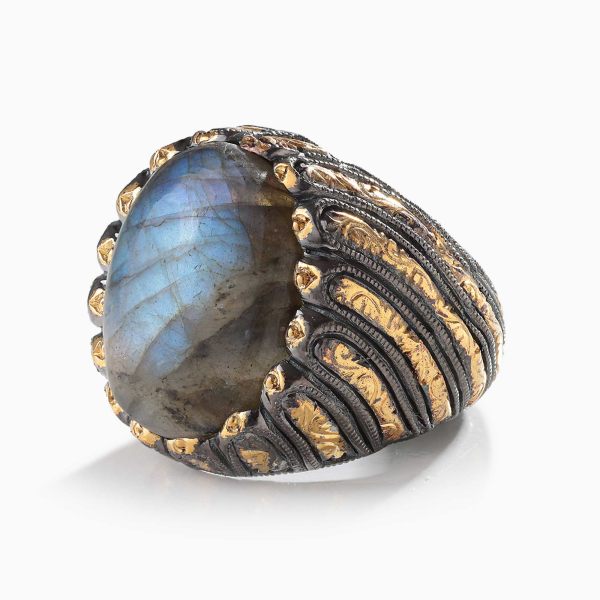
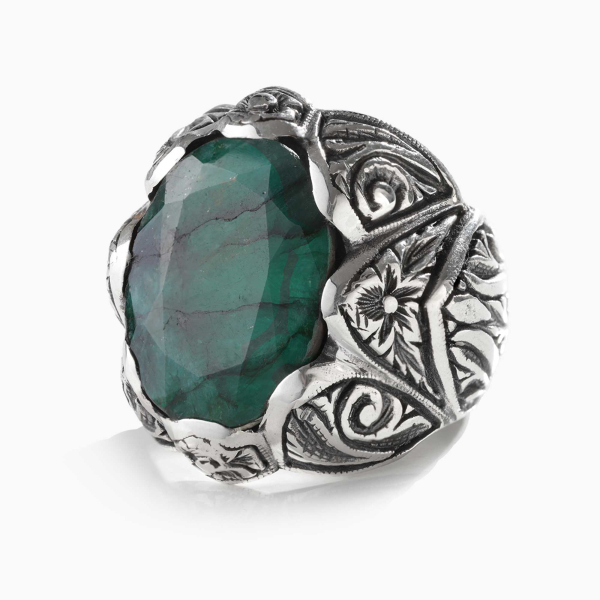
Our Sultan collection is inspired by that court style: large, hand-engraved sterling silver rings set with a single statement stone. Browse more Turkish jewellery, or read about another remarkable woman of the same court, Hürrem Sultan.
From the Sultan collection
Sources
- Leslie P. Peirce, The Imperial Harem: Women and Sovereignty in the Ottoman Empire (Oxford University Press, 1993).
- Ebru Turan, "The Marriage of Ibrahim Pasha (ca. 1495–1536)", Turcica 41 (2009).
- Necdet Sakaoğlu, Bu Mülkün Kadın Sultanları (2008).