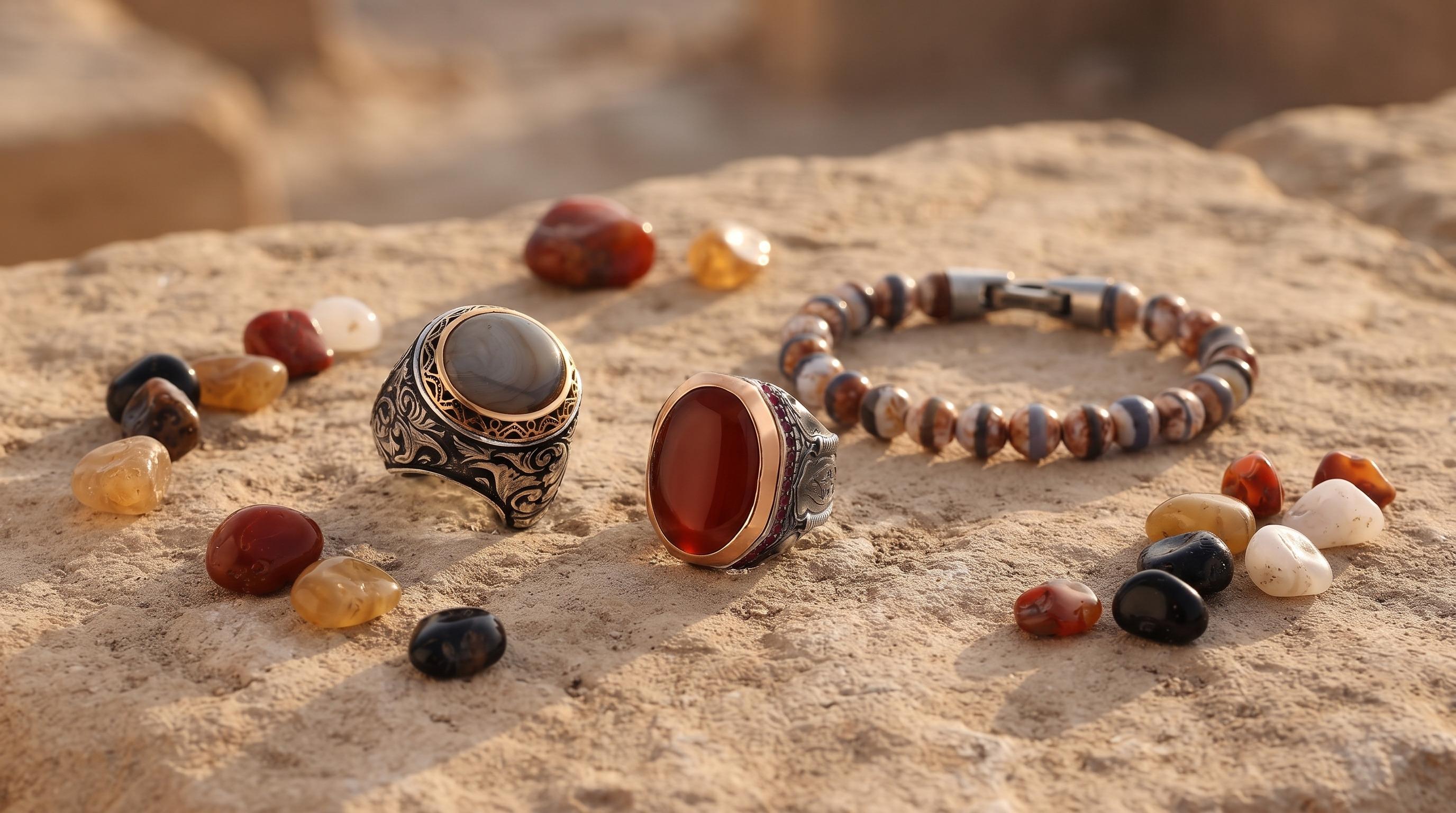
Few stones carry as much tradition as aqeeq. It has been carved into seals, set in rings and threaded into prayer beads for thousands of years, from Yemen and Persia to India. This guide explains what aqeeq is in English, what each colour is traditionally associated with, what Islamic tradition says about it, how to tell a genuine stone, and how to choose and care for an aqeeq ring.
What is aqeeq stone in English?
Aqeeq (Arabic ʿaqīq, also written akik or akeek) is agate. Gemmologically it belongs to chalcedony, a microcrystalline form of quartz. Two names are useful:
- Carnelian: the translucent red to orange variety, which is what most people mean by red aqeeq.
- Agate: chalcedony with bands or patterns, in almost any colour.
Agate forms slowly inside cavities in volcanic rock, layer by layer, which is why no two stones look the same. It is hard and tough, so a well-set aqeeq ring can be worn every day for decades.
Aqeeq colours and their meanings
Each colour has its own traditional associations. These come from culture and belief, not from scientific evidence, and they vary between traditions.
Red aqeeq (carnelian): meaning and traditional benefits
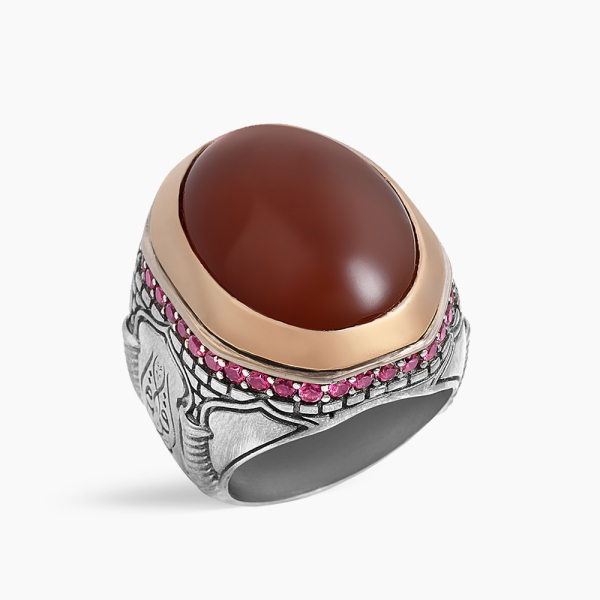
The most traditional aqeeq: a warm, translucent red that glows when held to the light. It is associated with courage, protection and vitality, and it is the stone most often set in Islamic rings. Much red aqeeq is gently heat-treated to deepen its colour, an old and stable practice.
Traditionally associated with:
- Courage and confidence
- Protection when travelling
- Vitality and warmth
Yemeni aqeeq: why it is special
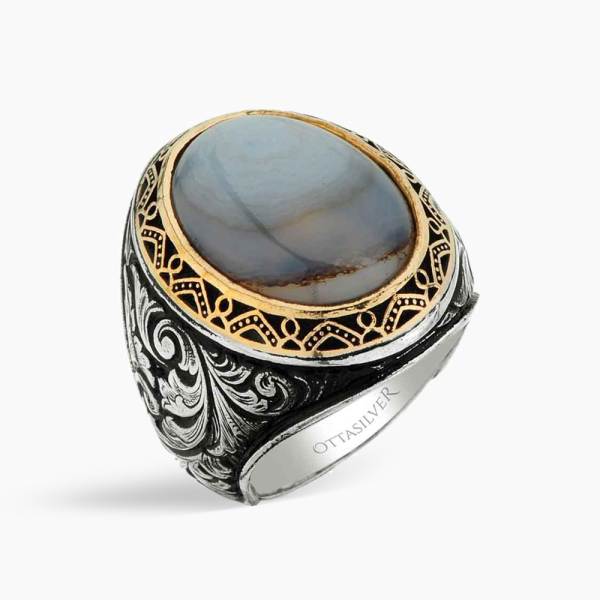
"Yemeni" describes origin, not a single colour. Yemen has been famous for its agate for centuries, and Yemeni aqeeq comes in red, honey yellow, white and banded grey-brown. It is especially prized by collectors and in Islamic tradition, and good Yemeni stones command higher prices.
Traditionally associated with:
- Long association with Arabian and Islamic tradition
- Blessing and protection
- A stone to pass down in the family
Yellow aqeeq: meaning and traditional benefits
Honey to golden yellow, often with soft bands. It is associated with joy, optimism and clarity of mind, and is especially popular in South Asia.
Traditionally associated with:
- Joy and optimism
- Clarity and focus
- Good fortune
Black aqeeq: meaning and traditional benefits
Deep black, sometimes with white bands. It is associated with strength, grounding and protection. Naturally jet-black agate is rare; most solid black agate, like black onyx, is colour-enhanced, a permanent treatment. See our black onyx guide.
Traditionally associated with:
- Strength and self-control
- Protection against negativity and the evil eye
- Grounding in difficult times
White aqeeq: meaning and traditional benefits
Milky white to pale grey, calm and understated. It is associated with purity, peace and clarity.
Traditionally associated with:
- Peace and calm
- Purity of intention
- Clarity
Green aqeeq: meaning and traditional benefits
Associated with renewal, balance and prosperity. Natural green chalcedony exists but is uncommon; much green agate on the market is dyed, so ask the seller how the colour was achieved.
Traditionally associated with:
- Renewal and growth
- Balance
- Prosperity
Brown and Tibetan agate: meaning
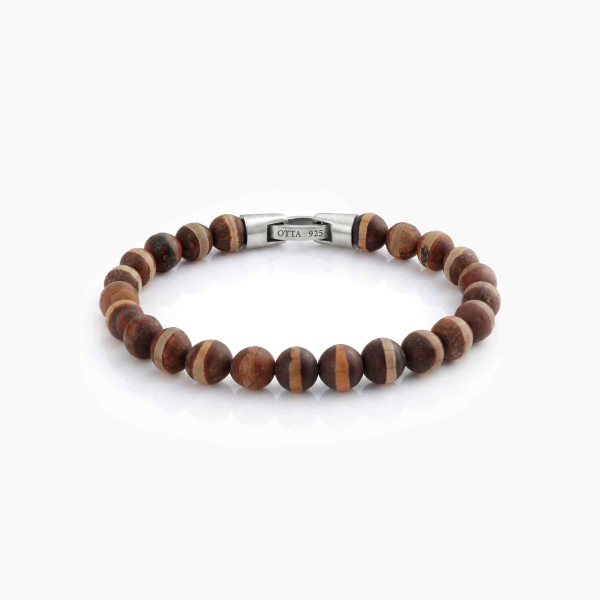
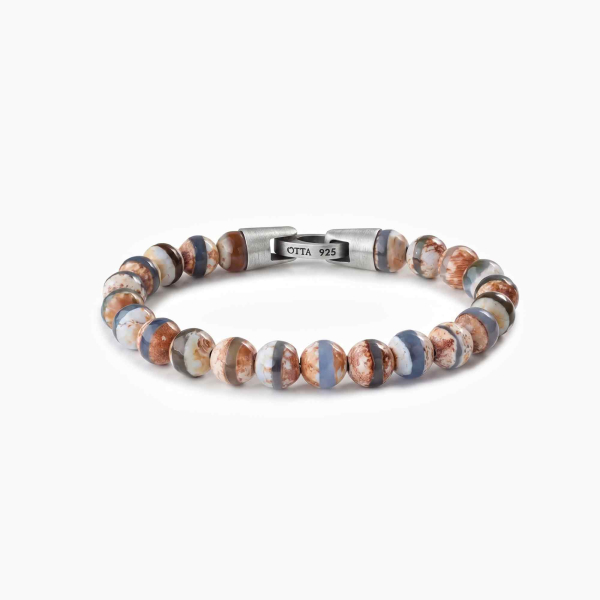
Earthy brown agates with stripes and eye patterns, including the Tibetan agate beads associated with protection and good fortune in Himalayan tradition. Tibetan agate is our most popular aqeeq piece by far: we sold more than a thousand Tibetan agate bracelets over the past year.
Traditionally associated with:
- Stability
- Protection
- Good fortune
Which aqeeq stone is best?
- For tradition: red or Yemeni aqeeq in plain silver.
- For everyday wear with any outfit: black or brown aqeeq.
- For a softer look: white or yellow aqeeq.
- For quality: look for even translucency, attractive natural banding and no visible cracks, rather than a particular colour.
Aqeeq in Islam
Aqeeq is closely linked with Islamic tradition, but it is worth being precise. The Prophet Muhammad (peace be upon him) wore a silver ring used as a seal, and some narrations describe its stone as "Abyssinian". Narrations that specifically praise aqeeq are found in several collections; many Sunni hadith scholars grade them as weak, while Shia tradition gives aqeeq a special place and recommends wearing it. For many Muslims, an aqeeq ring is a cherished tradition passed down in the family.
For what the narrations say about metals, hands and fingers, read our guide to Islamic rings for men.
Our aqeeq rings
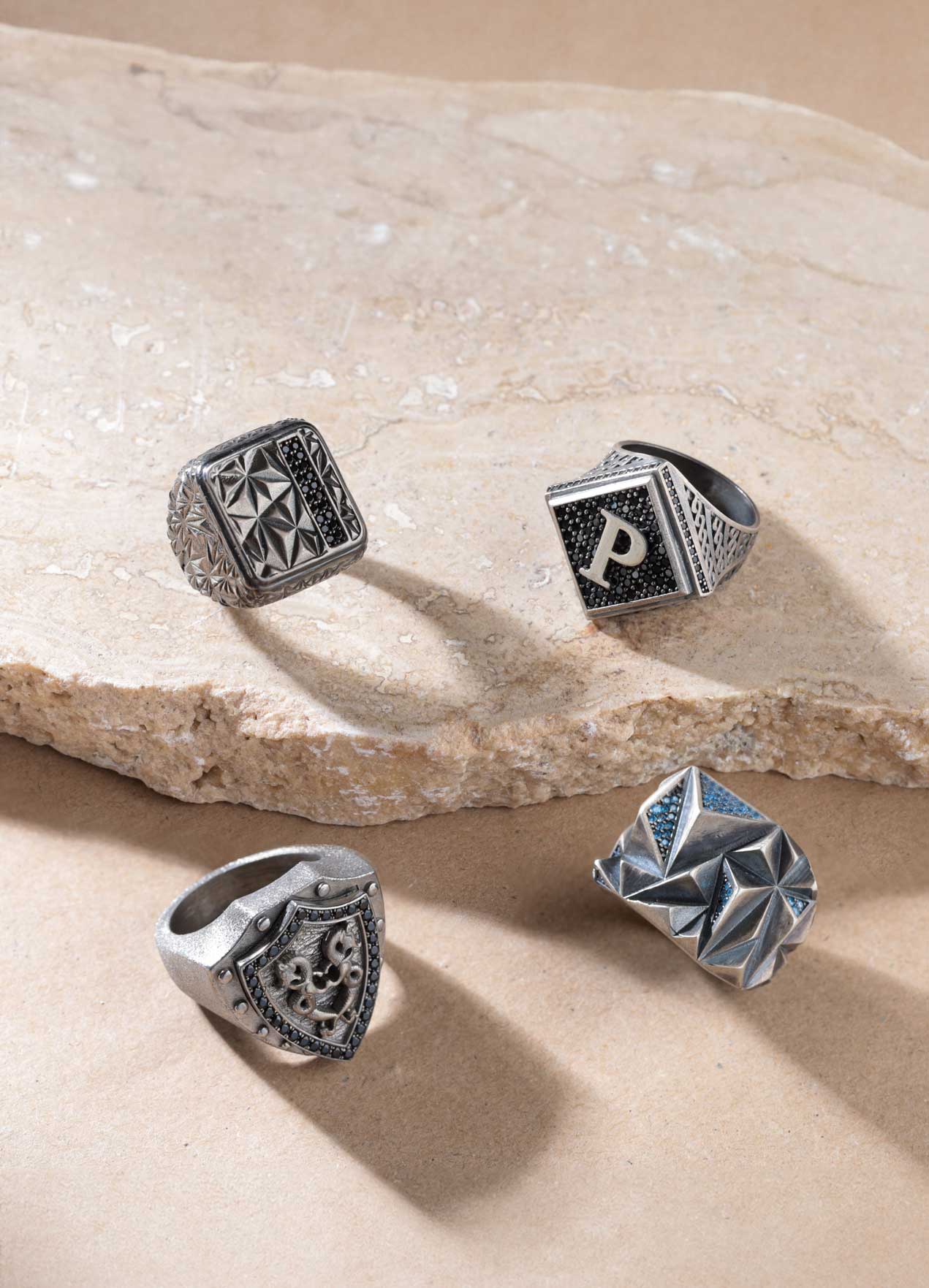
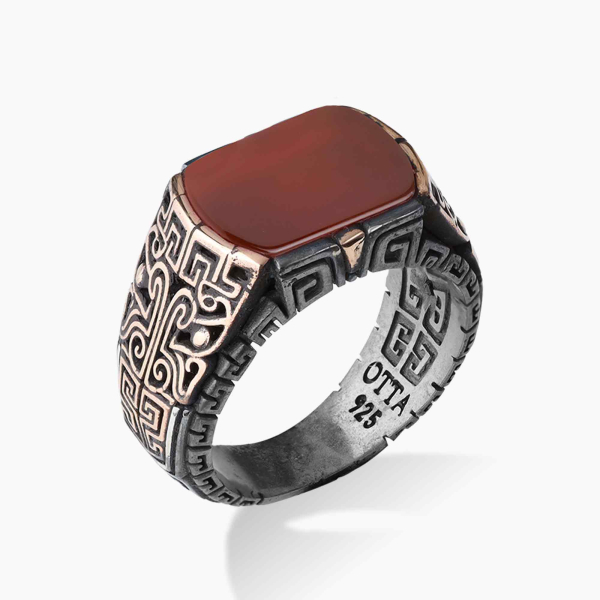
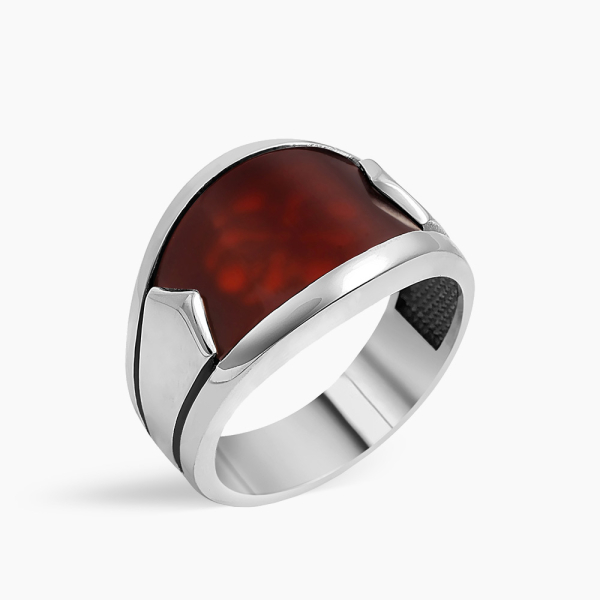
Our aqeeq rings are set in 925 sterling silver, from plain signets to hand-engraved designs. Browse all agate and aqeeq rings.
Aqeeq rings
How to check if aqeeq is original
- Hold it to the light: natural carnelian and most agates let some light through, with soft, uneven colour. Solid, flat, perfectly even colour suggests glass, plastic or a heavily dyed stone.
- Look at the bands: natural bands are irregular and flowing. Printed or repeating patterns are a warning sign.
- Look for dye: in dyed stones colour tends to gather in tiny cracks and along bands.
- Temperature and weight: real stone feels cool at first touch and heavier than plastic of the same size.
- Hardness: agate (6.5 to 7) scratches glass. Do not test this on a finished ring; a jeweller can check it safely.
- Ask: a good seller will tell you whether a stone is natural, heat-treated or dyed. Heat treatment of carnelian is normal; dye should be disclosed.
Which hand and finger for an aqeeq ring?
Many men wear an aqeeq ring on the right hand, and the little finger or ring finger are the most common choices. In Islamic tradition both hands are narrated, while the index and middle fingers are avoided. See which finger to wear a ring on for more.
Aqeeq bracelets and prayer beads
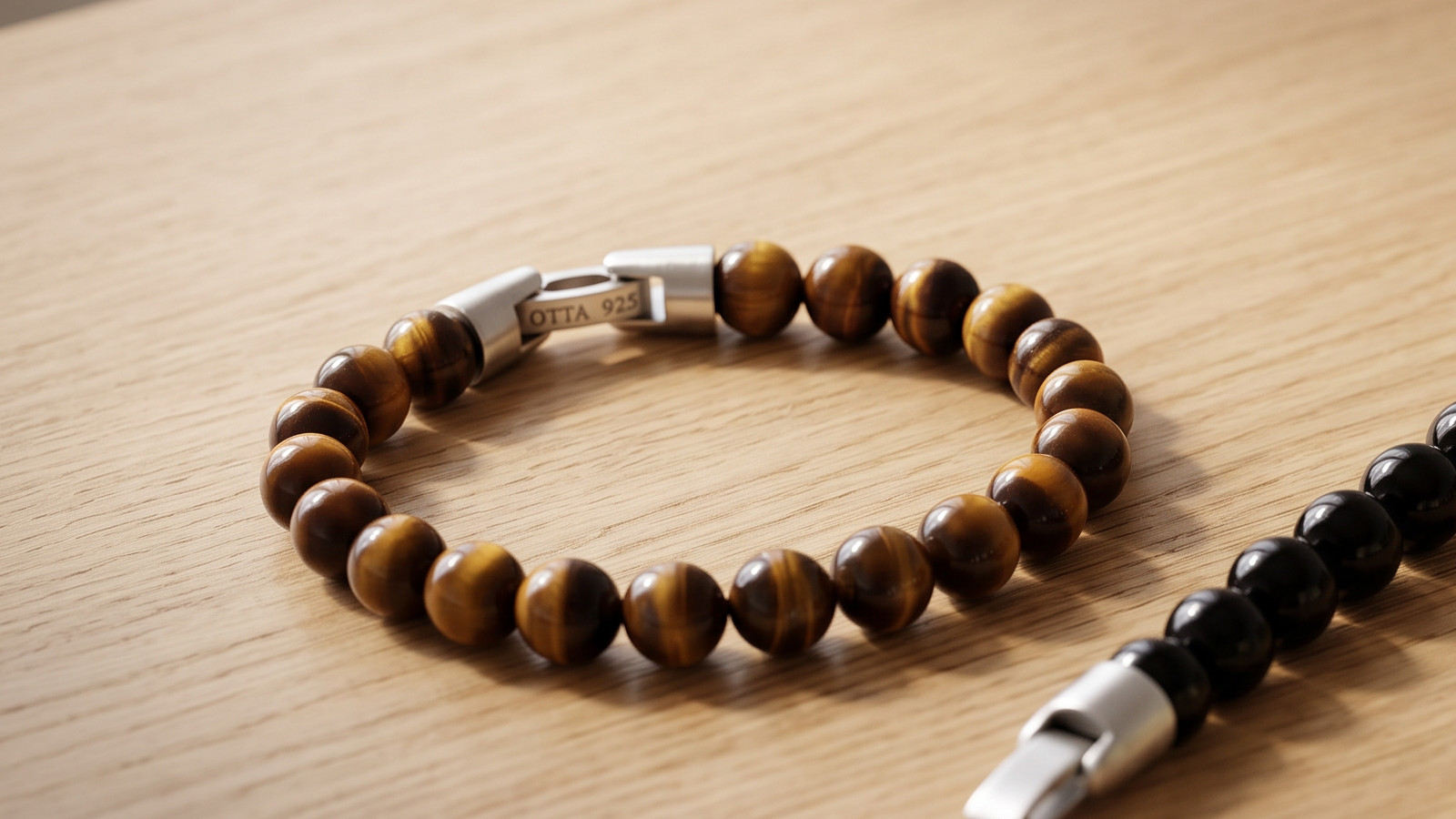
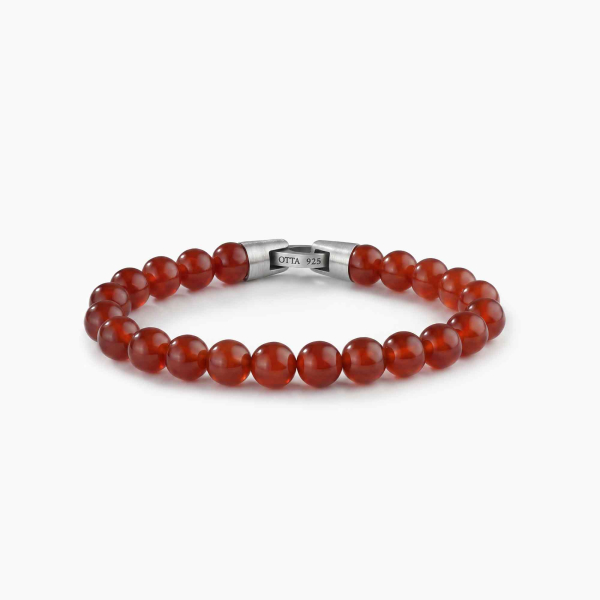
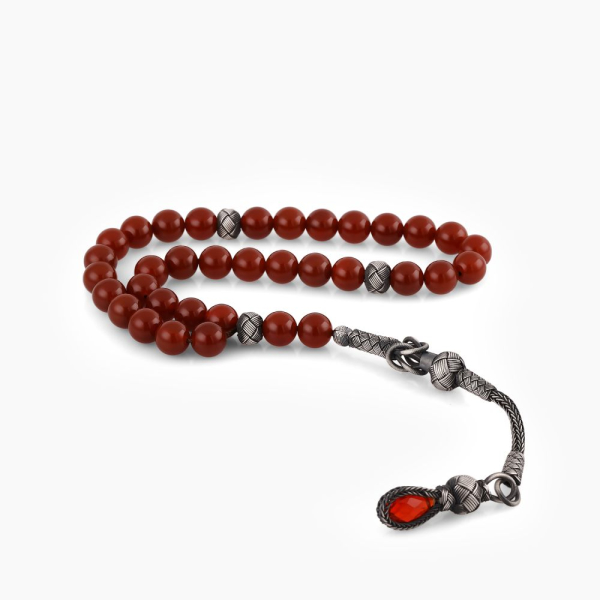
Aqeeq is just as loved in bead bracelets and tasbih. Round agate beads are durable, light and comfortable, and the bands make every strand unique. See what other bead stones mean in our beaded bracelet guide.
Aqeeq bracelets and tasbih
Caring for aqeeq
- Clean with warm soapy water and a soft brush, then dry.
- Avoid harsh chemicals and silver dip, which can harm dyed or treated stones.
- Keep it out of long, strong sunlight if the stone is dyed.
- Store it apart from diamonds and other harder stones.
For the silver setting, see our guide to cleaning sterling silver.
Frequently asked questions
What is aqeeq called in English?
Agate. The red, translucent variety is also called carnelian.
What are the benefits of aqeeq stone?
Traditionally, protection, calm, courage and blessing. These are beliefs rooted in culture and religion, not medical or scientific effects.
Which colour of aqeeq is best?
Red and Yemeni aqeeq are the most traditional; black and brown are the most versatile for everyday wear.
Is aqeeq the same as onyx?
They are close relatives: both are chalcedony. Onyx is the name used for black or straight-banded black-and-white stones.
Can I wear an aqeeq ring every day?
Yes. At 6.5 to 7 on the Mohs scale it is one of the most durable ring stones.